Visure Solutions can help overcome the challenges of product and embedded development
- Improve the quality of definition as an essential first step in boosting software quality
- Regain control of development and regulatory processes
- Standardize and enforce the requirements definition across the organization
- Support effective reuse of requirements across project teams and product lines and variants
- Formalize a common requirements specification structure, and handle changes throughout the lifecycle
- Achieve full traceability through all elements, from requirements to testing to execution
- Track all aspects of development with ease, from risk calculation graphics to orphan requirements reports
- Avoid pitfalls and mitigate risk at all levels, from writing better requirements and prioritizing needs to change impact analysis capabilities
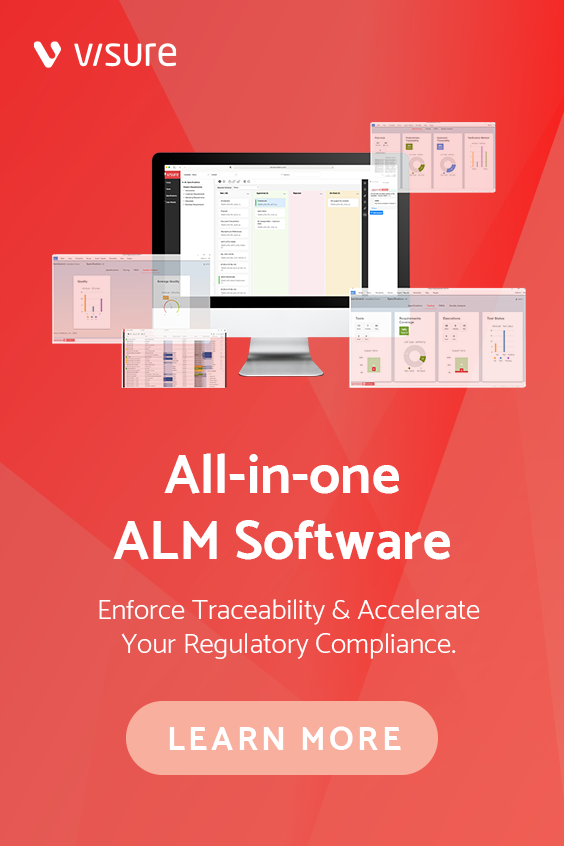
Visure Requirements is a proven flexible and complete Requirements Engineering tool, capable of streamlining the software requirements process as part of the hardware and mechanical definition process.
Visure Requirements aids effective project collaboration and increases software quality through Requirements capture, analysis, specification, validation and verification, management and reuse.
Benefits of using Visure Requirements for product and embedded development
- Certification support for industry standards, such as DO-178B/C, IEC 61508, ISO 26262, IEC 62304, FMEA and GAMP5
- One complete platform for all requirement-related activities
- Process enforcement through a flexible solution that supports different process models including Automotive SPICE, CMMI, V-model, Agile and ad hoc
- Improved team communication and collaboration through role-based capabilities
- Support for better quality products, and reduced software defects
Visure Requirements the software that helps you to define, support and enforce your product development process
Does your company need to develop products and embedded development in an affordable way, guaranteeing a high level of quality as well as delivering products to the market in a shorter period of time?